

 Tel:+86 400 118 5939
Address:Room 2810B, Block A, Tianli Central Plaza, Coastal City, Yuehai Street, Nanshan District, Shenzhen, Guangdong Province
Email:info@hyintern.com

 牌照号:TC004750
Tel:+86 400 118 5939
牌照号:TC004750
Tel:+86 400 118 5939Hong Kong and Singapore, as two shining pearls in Southeast Asia, are the main offshore financial centers chosen by mainland Chinese enterprises. The two have also chosen different directions on the path of economic development, making each side's economic development unique. But the two are the same, with very few taxes and extremely low tax rates. So what are the differences in corporate taxation between Singapore and Hong Kong?
Firstly, Hong Kong has always operated a low tax rate, few types of taxes, strict taxation, and easy to operate tax system, and offshore income remitted back to Hong Kong does not have to pay taxes. The tax system in Hong Kong, China is mainly based on direct taxes, with the main types of taxes being profits tax, salaries tax, and property tax, supplemented by a small amount of indirect taxes.
Singapore is also a popular place for offshore company registration, but its tax system differs from other offshore regions in that companies need to pay corresponding income tax to the Singapore Inland Revenue Department when remitting offshore income back to Singapore. The main taxes in Singapore include income tax, personal income tax, social security tax, real estate tax, labor tax, value-added tax, etc.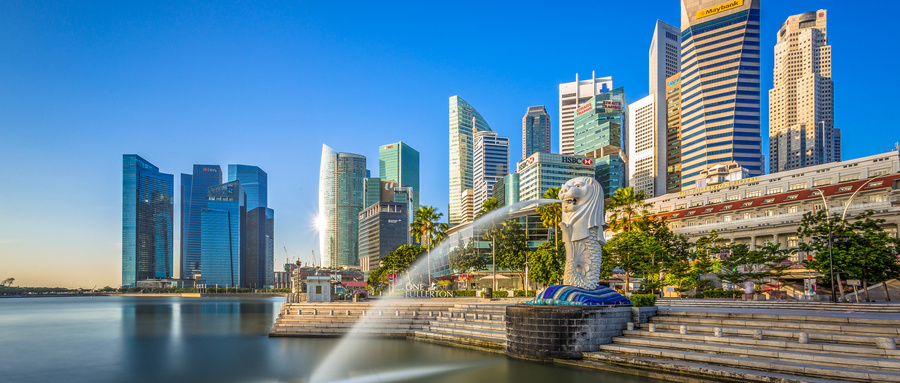
Below is a detailed comparison of tax policies between Hong Kong and Singapore companies using a table:
|
tax category |
Singapore |
Hong Kong |
|
Business income tax |
17%, granting tax exemptions to eligible enterprises |
Two tiered tax system, 8.25% for the first 2 million Hong Kong dollars and 16.5% for the following |
|
capital gains |
Not subject to taxation, but must hold more than 20% of the shares and have 24 months of ownership |
tax-free |
|
turnover tax |
Value added tax of 7% (free of charge for local sales of housing sales and rentals, financial services, and imported investment precious metals) |
none |
|
consumption tax |
Only tobacco, alcohol, hydrocarbon oil, and methanol are subject to consumption tax when imported |
Value added tax of 7% (free of charge for local sales of housing sales and rentals, financial services, and imported investment precious metals) |
|
Domestic dividends |
Corporate shareholders are not required to pay corporate income tax, while individual shareholders can include dividends in the corporate income tax exemption for personal income tax |
Dividends do not belong to operating income or salary income, and are not subject to taxation |
|
Is overseas income subject to taxation |
Remittance is subject to taxation, and overseas dividends and profits are exempt from taxation when they have already been taxed at least 15% overseas; Income from professional services, consulting services, and financial services from ASEAN countries is subject to unilateral credit. |
Not subject to taxation (excluding loan interest) |
|
Countries or regions that have signed tax treaties |
85 of them |
38 of them |
For many mainland enterprises, an important purpose of registering an offshore company is to achieve offshore exemption. From the above comparison, there is a significant difference between the two in this regard. Offshore income in Hong Kong is not subject to taxation as long as the entire process of a transaction (from finding a buyer to completing the transaction) occurs outside of Hong Kong. Cash receipts and payments can be made through banks in Hong Kong, but trade-related financing activities cannot be conducted through Hong Kong banks. The offshore income in Singapore has strict requirements. If the transaction occurs outside Singapore, but the funds generated from the trade enter Singapore, they also need to be taxed in Singapore. The entry of funds into Singapore not only refers to the direct entry of cash into Singapore, but also includes forms such as debt repayment and the purchase of fixed assets into Singapore.
Overall, as an independent country, Singapore is better than Hong Kong in signing foreign tax treaties. However, the tax composition and tax system characteristics of Singaporean companies are more inclined towards companies with actual business operations, and provide greater support to such companies. As a financial center dominated by offshore financial services, Hong Kong's tax system design and scope of taxation better reflect its positioning.

Scan QR code to follow 【Hongyuan International WeChat】
Email: info@hyintern.com
Hotline: +86 400 118 5939
