

 Tel:+86 400 118 5939
Address:Room 2810B, Block A, Tianli Central Plaza, Coastal City, Yuehai Street, Nanshan District, Shenzhen, Guangdong Province
Email:info@hyintern.com

 牌照号:TC004750
Tel:+86 400 118 5939
牌照号:TC004750
Tel:+86 400 118 5939Singapore attracts numerous mainland Chinese enterprises to invest and register companies due to its advantages of fewer taxes, lower tax rates, wider business scope, and freedom of foreign exchange receipts and payments. Although registering a company in Singapore has a low tax rate, tax reporting cannot be ignored. Like Hong Kong companies, Singaporean companies also need to undergo accounting audits after registration.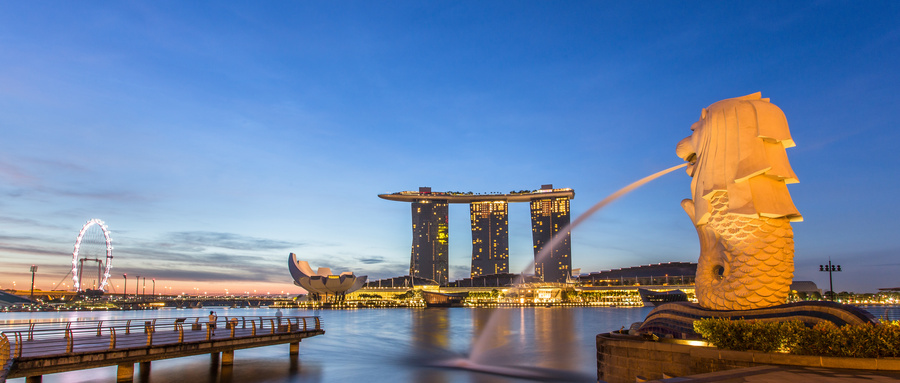
1、 Accounting for Singaporean companies
According to relevant laws and regulations in Singapore, all companies legally registered and established in Singapore are required to submit ECI and From C (or From C-S) forms within a specified time frame, both of which are important components of the annual tax declaration of Singaporean companies. Among them, the ECI form is used to fill in the estimated taxable income of Singapore companies for the corresponding tax year; The From C (or From C-S) form is used for the formal processing of tax reporting for Singaporean companies. Singapore companies need to truthfully organize and summarize their annual income and expenditure according to the requirements of these two tables when doing accounting.
2、 Types of audits for Singaporean companies
There are generally three types of audits for Singaporean companies, namely exempt audits, small company audits, and dormant company audits. If you want to apply for exemption from auditing, you must meet the requirements of a small company defined in Singapore.
1. Singapore Small Companies
A small company in Singapore refers to a Singaporean company with an annual turnover of less than SGD 5 million and fewer than 20 natural persons as shareholders (without any company shareholding). For such small companies, they can be exempted from accounting audit work under the audit exemption clauses of Singapore Companies Act Chapters 205B and 205C, and can directly submit their accounting statements and tax declaration forms for tax reporting.
2. Singapore Non Small Companies
For non small companies that do not meet the definition of a small company, it is necessary to audit the company's accounts (similar to Hong Kong companies, qualified accounting personnel are also required for this work), and submit the audit results along with accounting books and tax declaration forms to the Inland Revenue Agency of Singapore (IRAS) for tax declaration.
3、 The way Singaporean companies file taxes
1. Zero tax declaration: Singaporean companies have opened bank accounts but have not engaged in any business activities, and must also submit unaudited financial statements for tax declaration.
2. Post accounting tax reporting: Suitable for small companies that have already engaged in business activities. When submitting tax returns, unaudited financial statements are required.
3. Tax reporting after accounting audit: For Singaporean companies that do not meet the audit exemption requirements, their financial statements must be audited in accordance with the requirements and submitted together with the tax declaration form.
4、 Information required for tax reporting of Singaporean companies
1. Bank monthly statements and receipts;
2. Sales receipts: invoices, contracts;
3. Cost receipts: invoices, contracts;
4. Expense receipts: wages, rent (lease contract or agreement must be provided), freight, etc;
5. Other relevant documents: two original copies of the articles of association, one copy of the annual declaration form, one copy of the commercial certificate, one copy of the D1 form of the first secretary and director's notice, copies of all company change materials (if any), fixed asset bills, investment related documents, invoices for the first 3-5 purchases and sales of the following year, and corresponding payment receipts.
Accounting and tax reporting for Singaporean companies involve many professional fields, as well as the organization of various invoices. Only professional accountants know how to do accounting reasonably in order to save tax costs and achieve the goal of reasonable tax avoidance for the enterprise to the greatest extent possible.

Scan QR code to follow 【Hongyuan International WeChat】
Email: info@hyintern.com
Hotline: +86 400 118 5939
